
Emergencies
Fire
In the event of fire or the fire alarm sounding, please evacuate the building calmly and quickly. Both stairways, and the front and back doors, offer potential escape routes. This is why it is important not to block the staircases by placing a lot of suitcases and bags in their vicinity. Do not use the lift during an emergency evacuation. Pressing the button in the green panel next to both the front and back doors, marked ‘in emergency only’, disables the magnetic locks. The assembly point is in the car park at the rear. Fire stewards are responsible for using the signing in book and clinic and teaching registers to check that everyone is out of the building. Do not re-enter the building until you are told it is safe to do so by the Fire steward. Fire Stewards will be identified by a red hat for the whole building fire steward, and a yellow hat for the clinic/reception area.
Fire Equipment and Stewards
Fire procedures will be pointed out to you on induction. A copy is also kept on the notice board on the second floor and by reception.
If the alarm (a continuous siren) sounds then: LEAVE THE BUILDING IMMEDIATELY (Do not run!) DO NOT WAIT TO BE TOLD TO LEAVE
Our normal assembly point is the car park outside the rear entrance door. If the rear door is unsafe to use, use the front door then go immediately round to the assembly point via Trinity Lane.
Fire stewards will ensure that the assembly does not block the route for fire appliances
FIRE ALARM ACTIVATION POINTS are located:
- by the front door
- by the rear door
- by the landing of the main staircase (Ground, 1st and 2nd floors)
- by the landing of the rear staircase on each floor
- by the double doors outside the basement teaching room
- by the door to the staff room in the attic.
The alarm is tested on a weekly basis. This usually occurs on Thursday at 9 a.m.
Fire Extinguishers
There are four types of extinguishers located at Fire Points throughout the building:
- FAT RED FIRE EXTINGUISHERS WITH A HOSE (9ltr water) which are suitable for paper, etc., but NOT for electrical fires;
- THIN RED FIRE EXTINGUISHERS WITH A BLACK BAND/ CO2 FIRE EXTINGUISHERS WITH A NOZZLE/HORN which are suitable for electrical fires and flammable liquids;
- POWDER FIRE EXTINGUSIHER WITH BLUE BAND which are suitable for flammable gas fires, paper, flammable liquids; and
- FOAM FIRE EXTINGUSHER WITH CREAM BAND which are suitable for paper and other free-burning solid materials and flammable liquid fires.
There is also a fire blanket available in the basement and one in the large ground floor kitchen/acupuncture clinic discussion room. They are useful for smothering small fires – such as a fire set off by burning moxa or dry toast stuck in the toaster in the kitchen.
Fire extinguishers are maintained annually. Fire training occurs at regular intervals for staff and is arranged by the College Manager. You should only try to tackle a fire using a fire extinguisher if you know what you are doing and if it is safe to do so. Remember, the safety of you and all the people in the building is of paramount importance.
There are Dorgards on all fire doors, doors on fire exit routes or large rooms. These are noise activated and should release automatically when the fire alarm sounds. DO NOT WEDGE doors with Dorgards open as it defeats their purpose and in fact is illegal – a direct contravention of the Fire Safety regulations.
Dorgards work by listening out for a continuous sound of 65 decibels or higher. Once this sound has been identified, after approximately 14 seconds Dorgard will release the fire door and under the pressure of the overhead door closer the door will close, sealing the area and preventing the spread of smoke and fire.
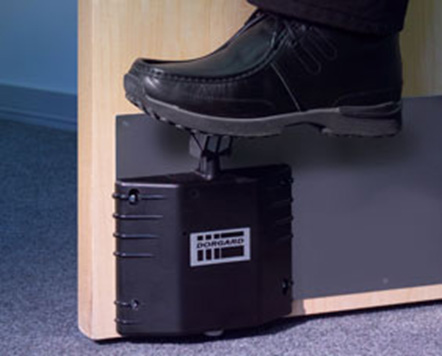
To hold the door open, press down on top of the black knob whilst pulling the door gently in the direction of closing.
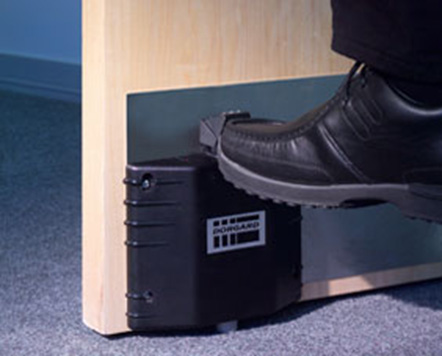
To release the Dorgard, press the black knob in lightly. Push the door in the direction of opening.
FIRE STEWARDS:
All staff are responsible for stewarding the area they’re located in, within the building, and reporting their updates when everyone has assembled in the car park.
Do not return to the building until you have been told it is safe to do so.
Fire drills are conducted at regular intervals – at least once per year.
Personal Emergency Evacuation Plans (PEEP)
Students with disabilities that may affect their ability to get out of the building in the event of an emergency should arrange to see the College Manager to discuss their Personal Emergency Evacuation Plan (PEEP). This is an agreed course of action to be followed to ensure the safe evacuation of the student concerned.
Detailed responsibilities in the event of a fire
Information and action is required from the Whole Building Fire Steward, Reception Fire Steward, clinic supervisors and tutors.
Whole Building Fire Steward
- On hearing the fire alarm, staff should check the fire panel to ascertain where the fire is located if it is safe to do so. This is to isolate and tackle the fire if possible and also to inform the fire brigade about the location of the fire when they arrive. Whilst moving to the alarm panel, make sure any other people in the building are making their way out.
- If the fire panel is showing a fault the fire steward should ascertain that this is a fault, by checking the area.
- Sweep the building to make sure all occupants have vacated it.
- Liaise with the Fire Brigade if necessary.
- Once it is safe to do so, organize an orderly re-entry into the building.
- If a false alarm has occurred, it may be necessary to call out the alarm service engineers; refer to the instructions in the Fire Logbook.
Reception Fire Steward
1. The receptionist takes the sign-in in book with them when exiting the building. If it is safe to do so, grab the fire log located above the fire alarm panel before exiting the building. If the fire panel is showing a fault the Whole Building fire steward should ascertain that this is a fault, by checking the area
2. Make sure the waiting area and reception area are cleared of people.
3. Assign a member of staff (or failing one being available close by, a student) to wait at the front door for the fire brigade and deter anyone from entering the building until it is known to be safe. This person is to ask any staff or students trying to get into the building to walk down Trinity Lane to join everyone else at the assembly point. Remember that the maglocks on the front and back may be automatically disabled when the fire alarm sounds.
4. On the way out, make sure the clinic supervisor is evacuating anyone in the clinic.
5. If the fire alarm panel is showing a fault, tell the Whole Building Fire Steward so they can check this.
6. Once at the assembly point, the Reception Fire Steward should start checking off names from the book. If anyone is signed in but cannot be found in the assembly area, alert the Whole of Building Fire Steward.
7. Reception fire steward locates any tutors in charge of teaching sessions, or any clinic supervisors and ensure they have accounted for students and clients on their registers/diaries.
8. Liaise with the whole of Building fire steward to ensure that everyone is accounted for and source of fire or fault is known.
9. Fire stewards will ensure that the car park assembly does not block the route for fire appliances coming into College via Trinity Lane and the car park.
10. When it is safe to re-enter the building, make sure the person at the front door is informed.
Tutors and supervisors
1. Tutors and clinic supervisors should grab the register or diary before exiting the building as well as encouraging the cohort and/or clients to go to the assembly point.
2. Once outside, account for everyone on the register or in the diary.
3. Tell the reception fire steward whether everyone is accounted for.
4. When it is safe to do so, lead the cohort being taught or clinic group back in.
NB Out of hours the visitor’s book is the responsibility of the Whole Building Fire Steward or a tutor.
1. Room Hirers are responsible for evacuating their space.
2. Any graduate clinic users out of hours are responsible for evacuating their own patients.
The Lift
In the unlikely event of the lift being jammed between floors, firstly reassure any passengers within the lift asking them to keep clear of the lift doors. Then notify a member of staff. Students should never attempt to release passengers themselves.
To prevent doors becoming stuck in the open position it is advised never to prop doors open preventing them from shutting.
Emergency Contact for Students at weekends
THE USUAL COLLEGE PHONE NUMBERS MAY NOT BE ANSWERED AT THE WEEKEND.
For students who are attending classes at weekends, we recommend you keep your mobile phone turned on but in silent mode, so that family and friends can contact you in an emergency.